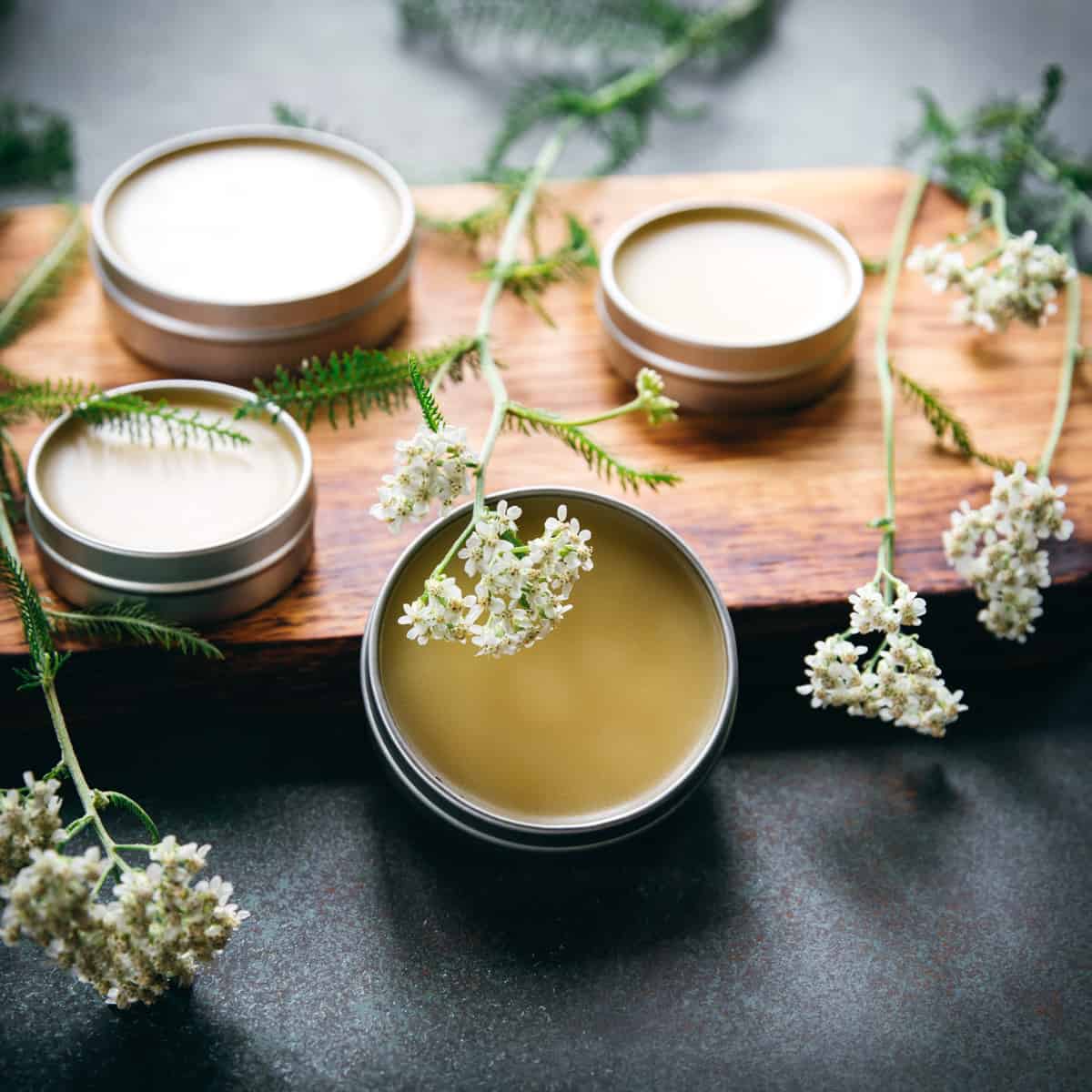
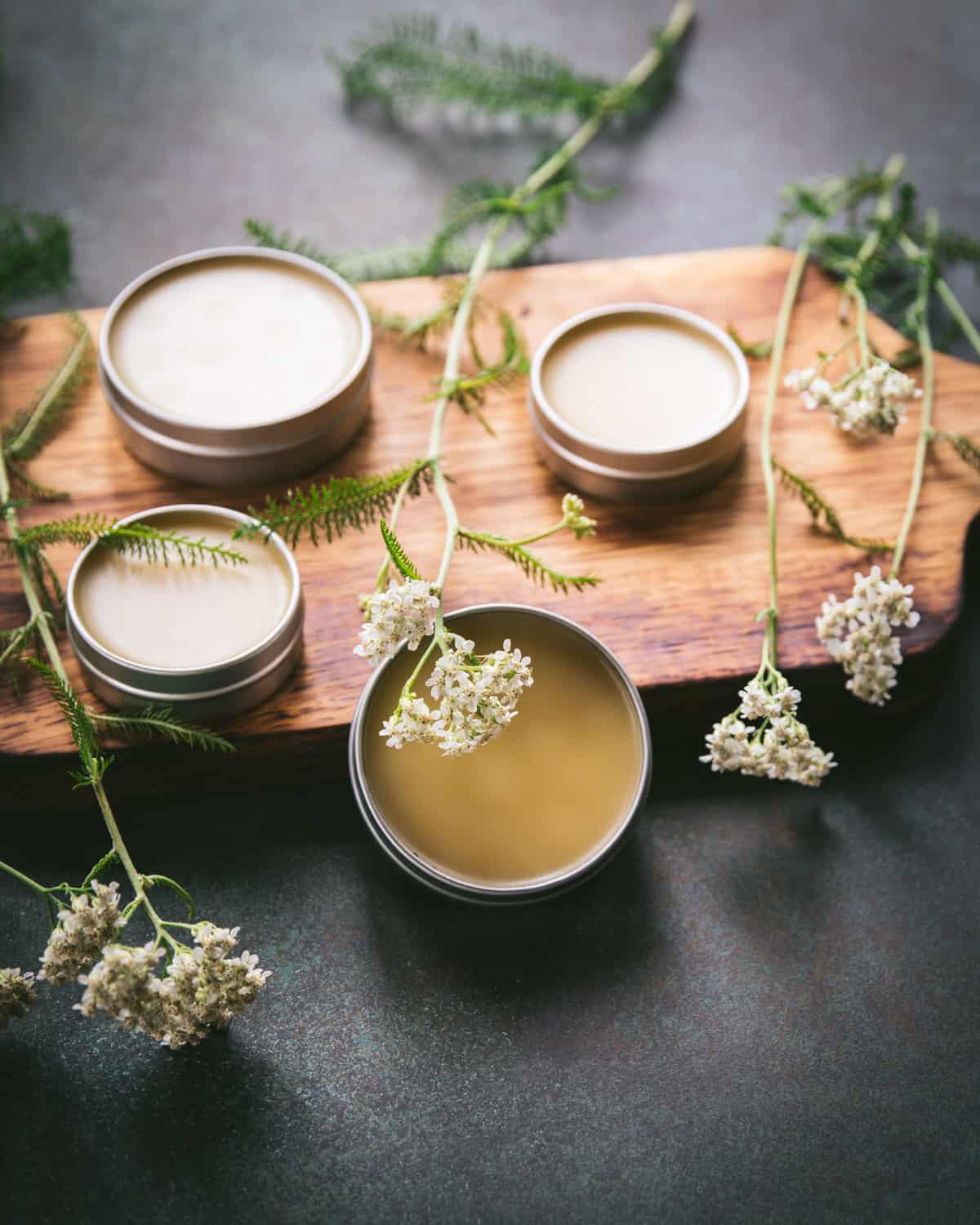
The yarrow plant grows commonly and is edible and topically useful. Yarrow’s herbal support makes it incredibly helpful in a salve. Learn how to create a salve to easily access yarrow’s topical uses!
Want to save this post for later?
Have you ever wondered if the weeds in your backyard are useful?
Foraging & Using Backyard Weeds, my ebook, teaches beginning foragers how to identify common edible and medicinal plants that are probably growing in your backyard.
You’ll learn straightforward techniques and recipes to forage and use wild edible weeds with confidence!
About Yarrow Plant
Yarrow grows almost everywhere and is a perennial plant in the Asteraceae family. It grows year-round in temperate climates with flowers that bloom in the spring.
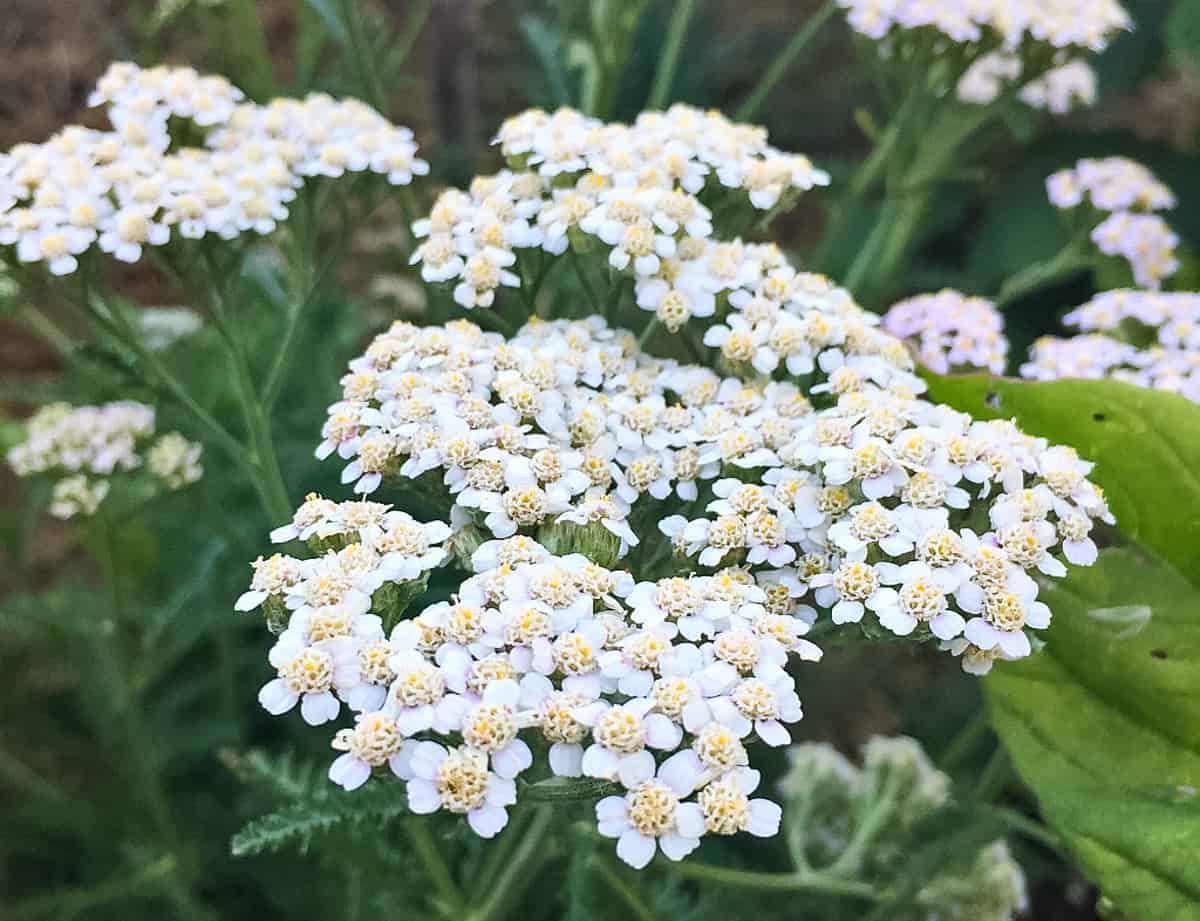
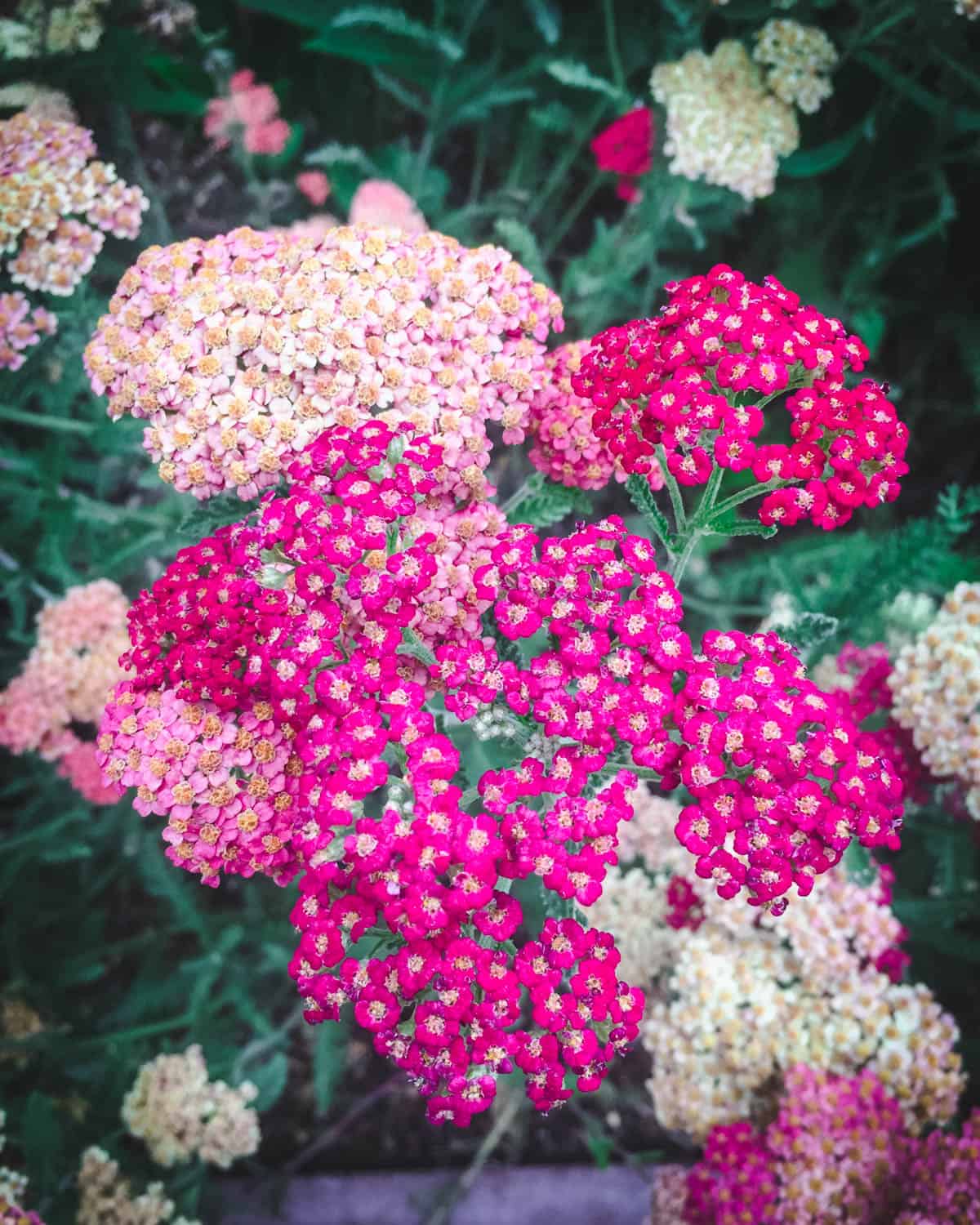
The yarrow plant most often has white flowers, but can also have yellow or pink flowers. It’s easy to find growing in yards fields, or disturbed areas.
To harvest yarrow for salve, first, make sure to properly identify it. Yarrow has a few look-a-likes, including Queen Anne’s lace and one highly toxic plant, poison hemlock.
For more in-depth identification and look-a-like information, read my post on how to identify yarrow.
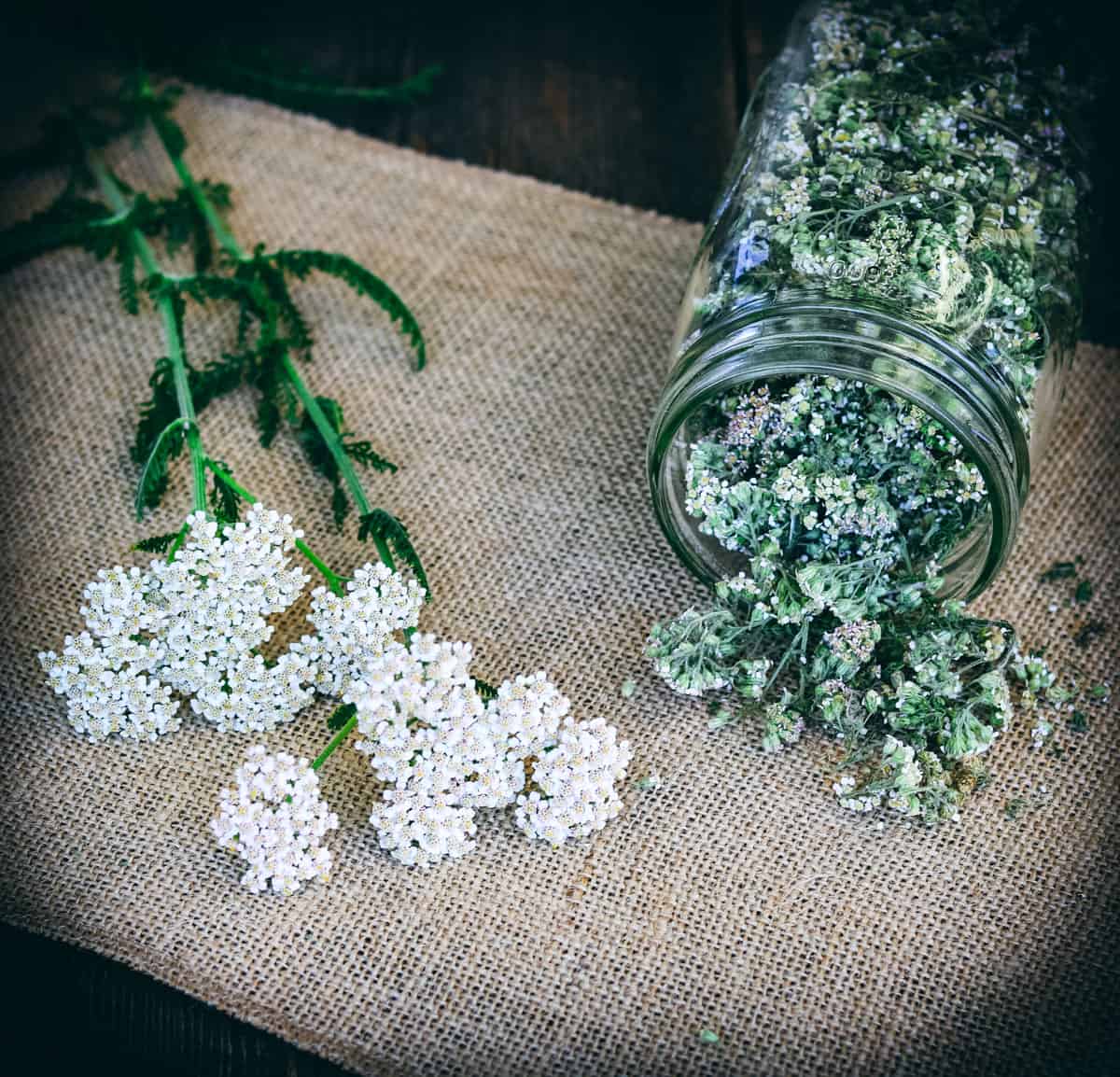
Harvest yarrow fresh, including the leaves and flowers. You’ll want to use dried yarrow to make this salve, so either hang the yarrow stalks upside down or spread out the leaves and flowers on a drying screen.
Both the flowers and leaves are okay to use to infuse the oil for this salve, so harvest and dry both if available.
Yarrow Benefits
While the yarrow plant is edible, for this post, we will focus on its topical herbal uses, as we are making a salve for the skin.
Several scientific studies indicate that yarrow helps wounds heal more quickly, slows bleeding, promotes skin regeneration, and reduces scarring. In salve form, yarrow works wonders to help heal minor cuts and wounds as well.
The yarrow plant also has general skin-supporting properties, too. It can make a very soothing soap, like this wild rose and yarrow soap. Yarrow has astringent properties and is super soothing for topical use.
Studies have proven that yarrow exhibits antioxidant and antimicrobial activity, as well as skin-calming and anti-inflammatory effects. It is recommended for use on sensitive skin and has been experimentally shown to soothe irritated skin caused by various natural elements, as well as chemical compound irritation from cosmetics.
This yarrow salve has the potential to ease the redness, swelling, or discomfort associated with acne, chapped skin, sunburn, windburn, or other dry and cracked skin conditions.
You can also make an arnica and yarrow skin cream as another way to access the skin-soothing elements of yarrow.
If you’re interested in the internal herbal use of yarrow, try making this homemade soda with yarrow, rose, and strawberries. It’s delicious!
How to Make Yarrow Salve
Now that you know all about what the yarrow flower looks like and its potential, it’s time to put it to use and make a salve! This is a straightforward process suitable for even the most novice herbalists.
Ingredients
Dried yarrow: Use both the flowers and leaves, or one or the other is ok too depending on what you have available. The flowers aren’t always in bloom, so if you end up with mostly or only the leaves, that’s just fine!
Alternatively, if you don’t have any yarrow plants to forage, you can opt to buy dried yarrow. Mountain Rose Herbs is my favorite place to buy high-quality, organic herbs.
Carrier oil: Olive oil works great as a carrier oil and you likely already have some on hand. I usually use a blend of about 50% olive oil, 25% coconut oil, and 25% sweet almond oil.
All of these oils have their own benefits, and you can use any combination that you want.
Beeswax: I buy this beeswax from Mountain Rose Herbs. Feel free to use the pastilles if you prefer.
Make the Yarrow Infused Oil
To make the infused oil, add the dried yarrow plant (flowers, leaves, or both) into a jar until it’s about halfway full. Then pour the carrier oils of your choice over the herbs to fill the jar.
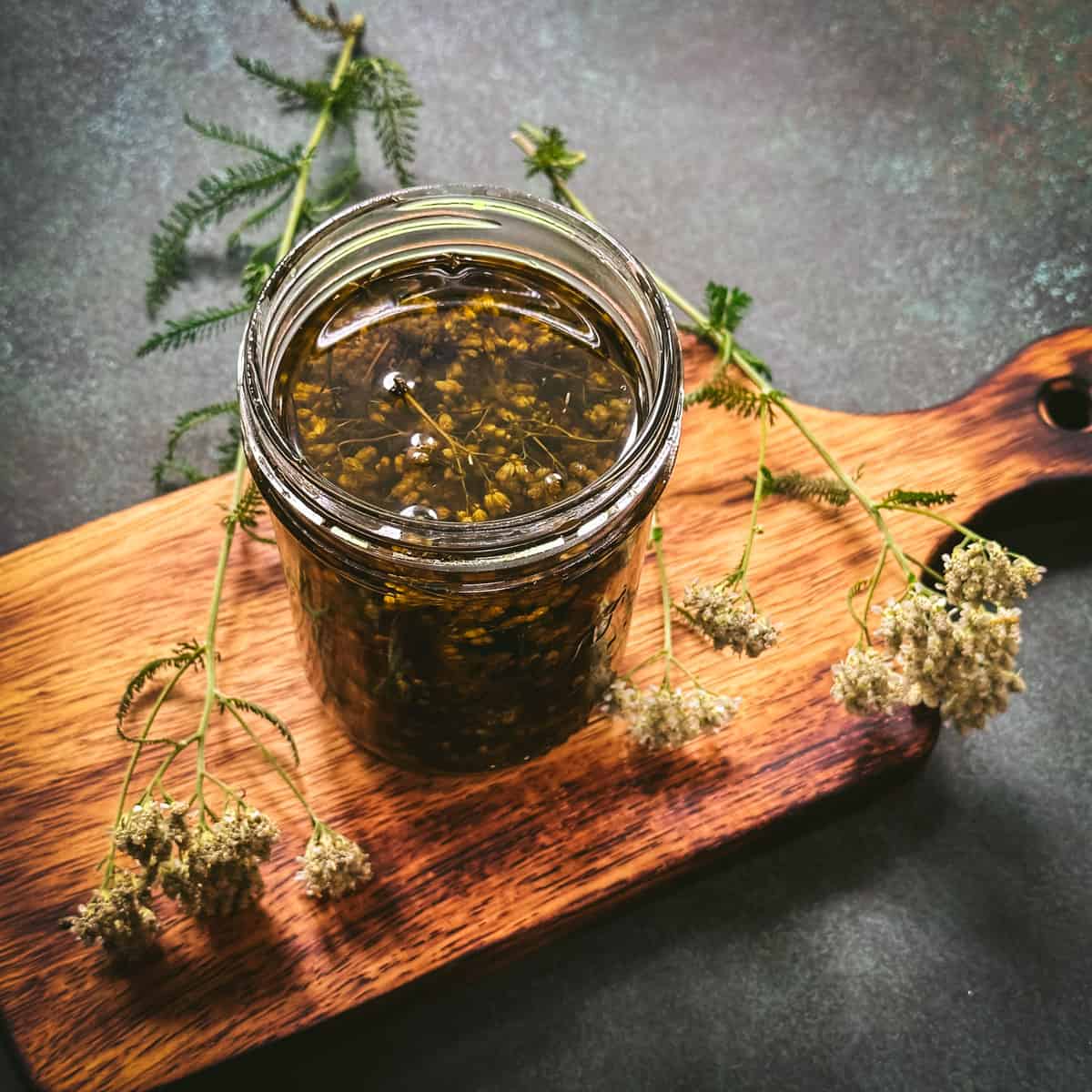
Place a lid on the jar and let the oil infuse for around 4-6 weeks or more. Keep the jar in a cool and dark place that is out of direct sunlight while it infuses.
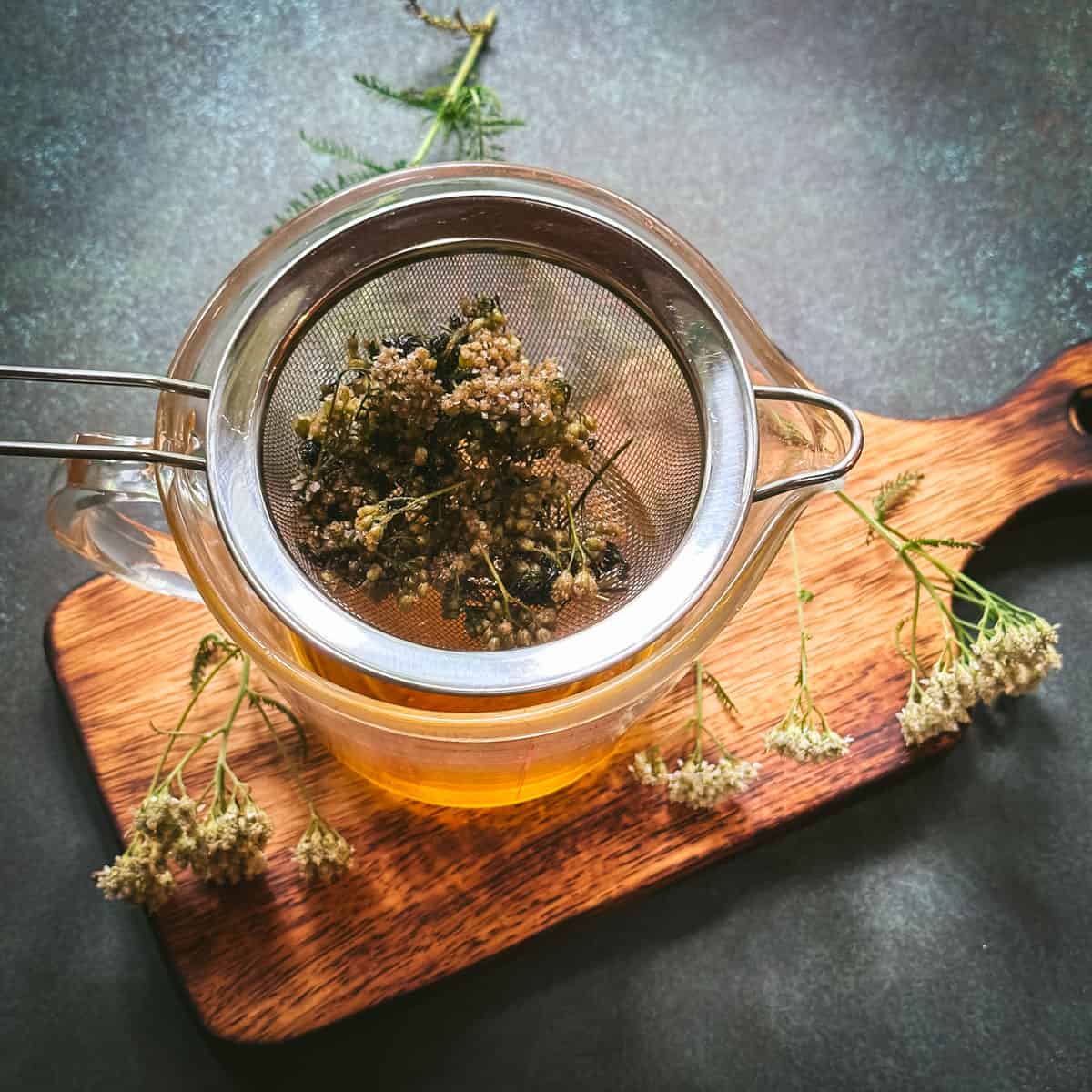
Once the oil is infused and ready to use, strain the dried yarrow plant from the oil. I use a fine mesh sieve lined with cheesecloth so I can squeeze the remaining oil out of the herbs with the cloth.
Make the Yarrow Salve
First, use a double boiler to heat the yarrow plant-infused oil.
Note: If necessary, it’s okay to use a makeshift double boiler by putting a small bowl or glass Pyrex measuring cup over a pot with about an inch of simmering water.
Once the infused oil is warmed, add the beeswax and stir it occasionally as it melts. I find that a bamboo skewer or chopstick works well for stirring the beeswax until it’s dissolved into the oil.
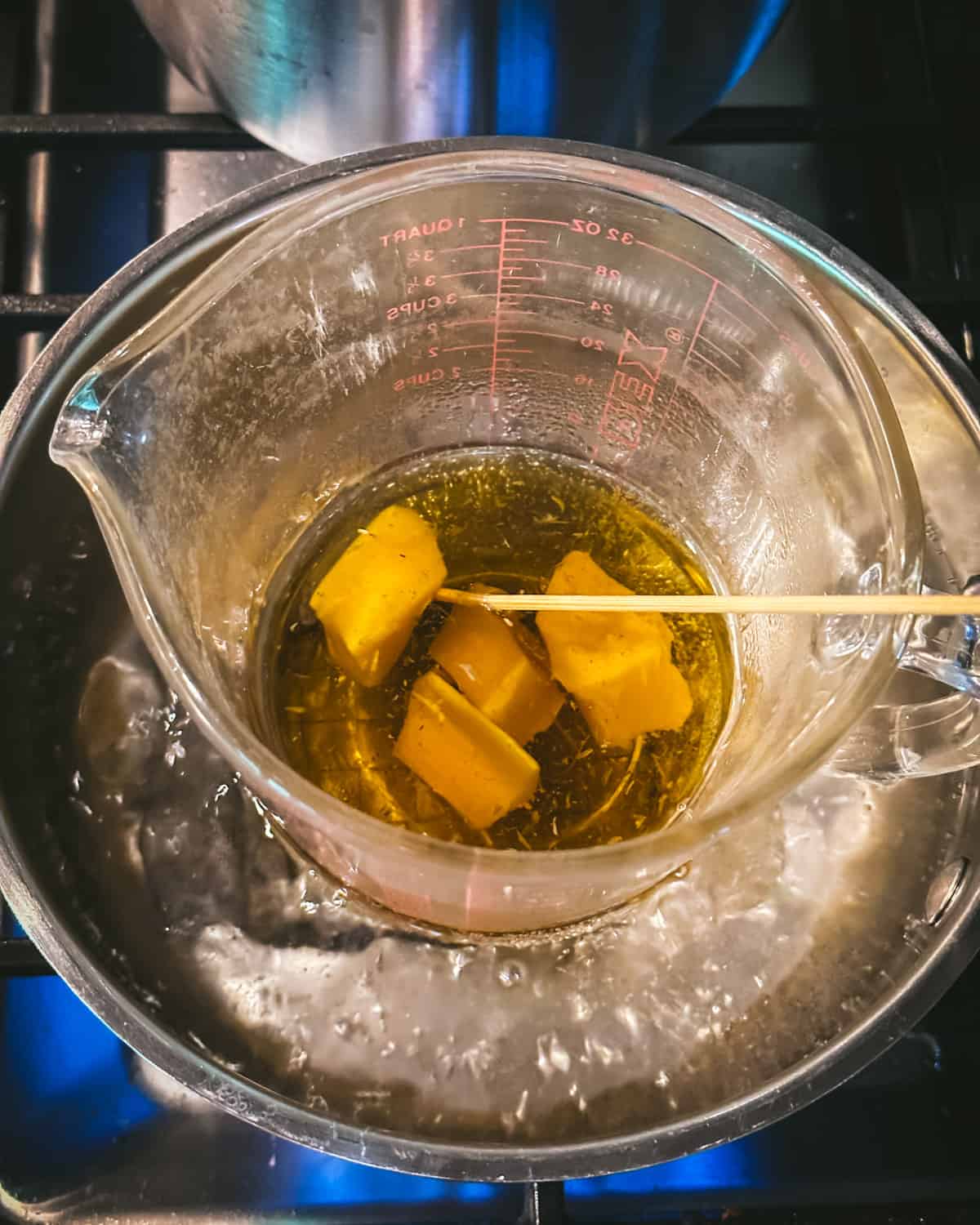
Take the oil and beeswax mixture off of the heat and continue to quickly stir until it melts completely, and pour the warm yarrow plant salve mixture into jars or tins.
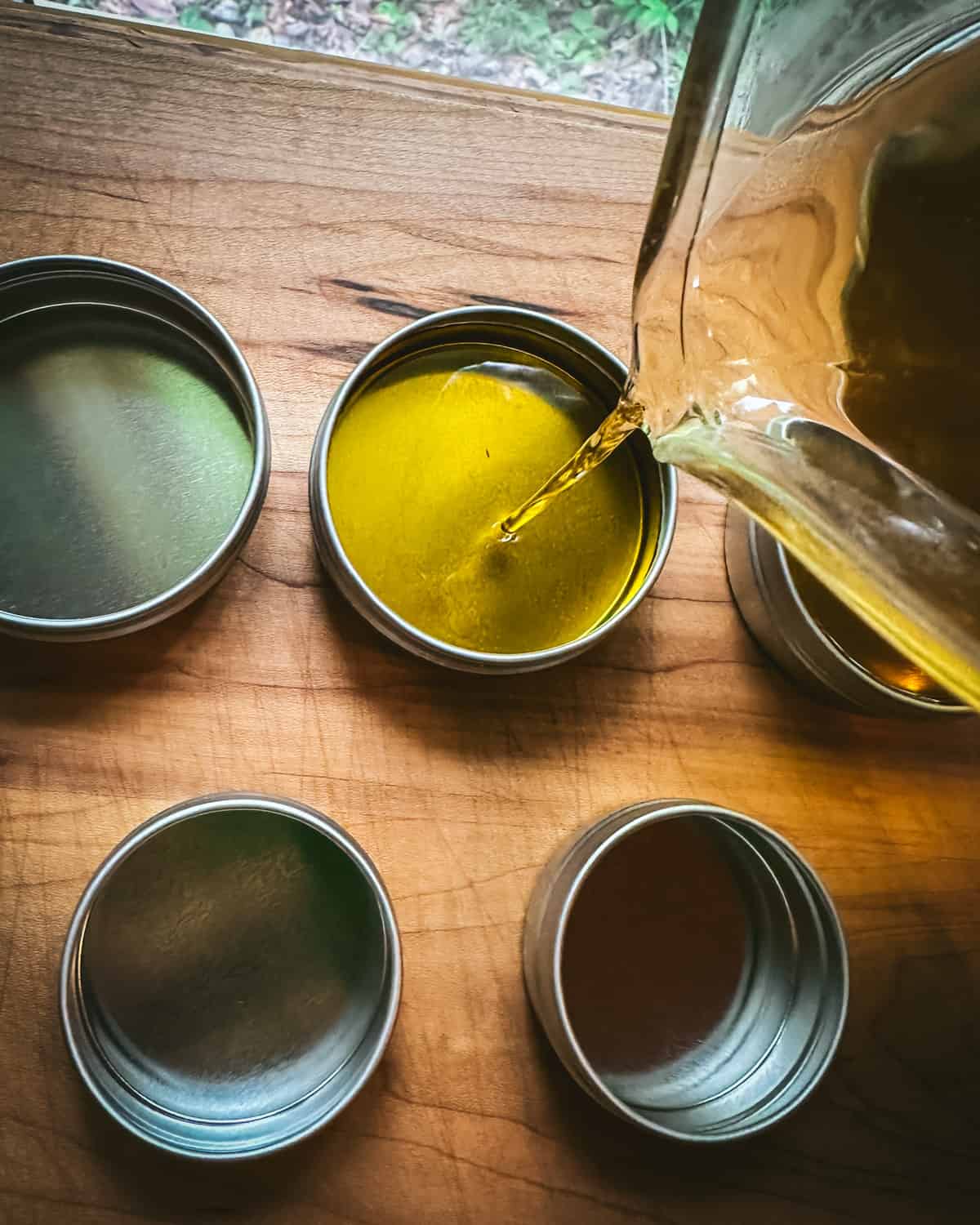
Let the tins of salve rest for several hours to cool and set.
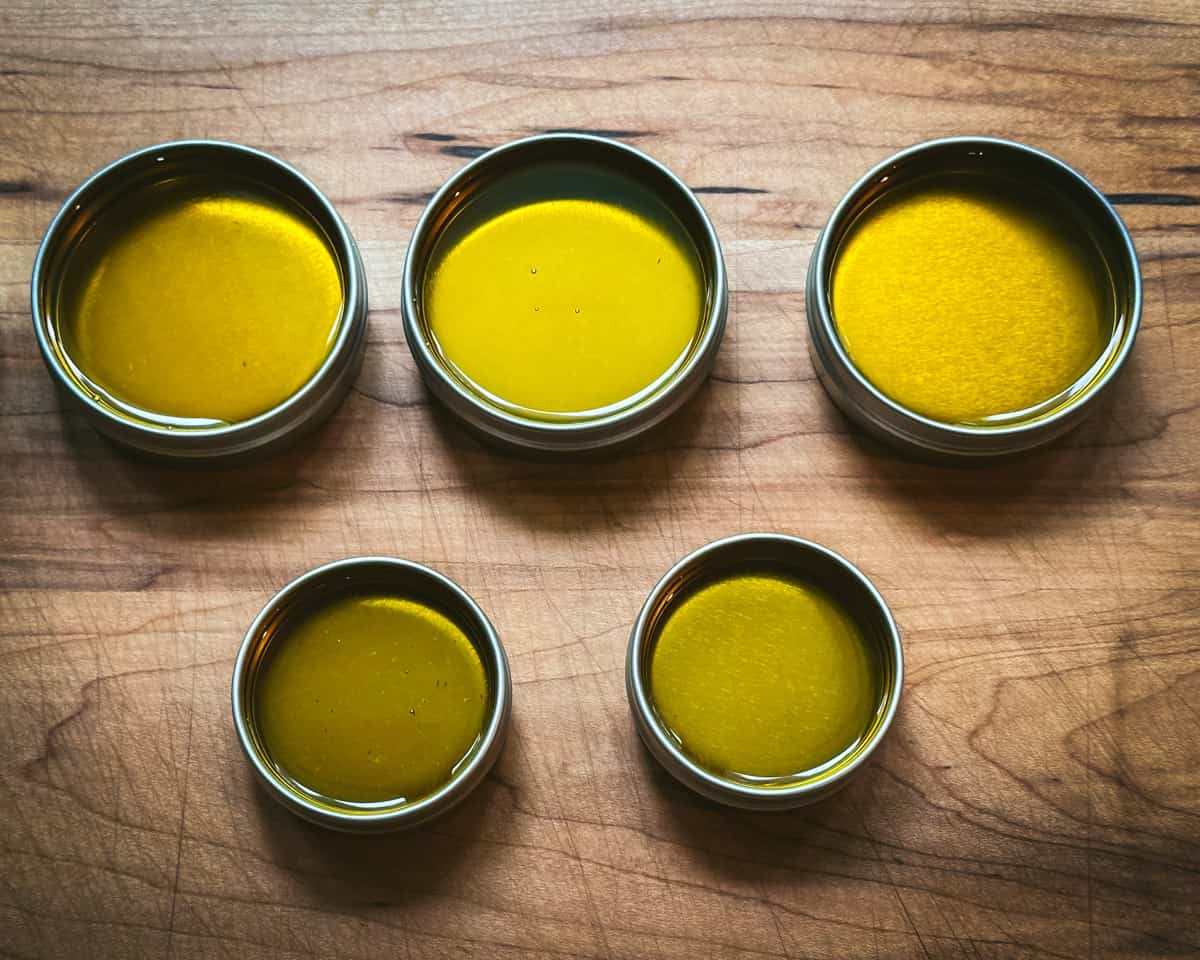
Once it is completely set, you can use your homemade yarrow salve!
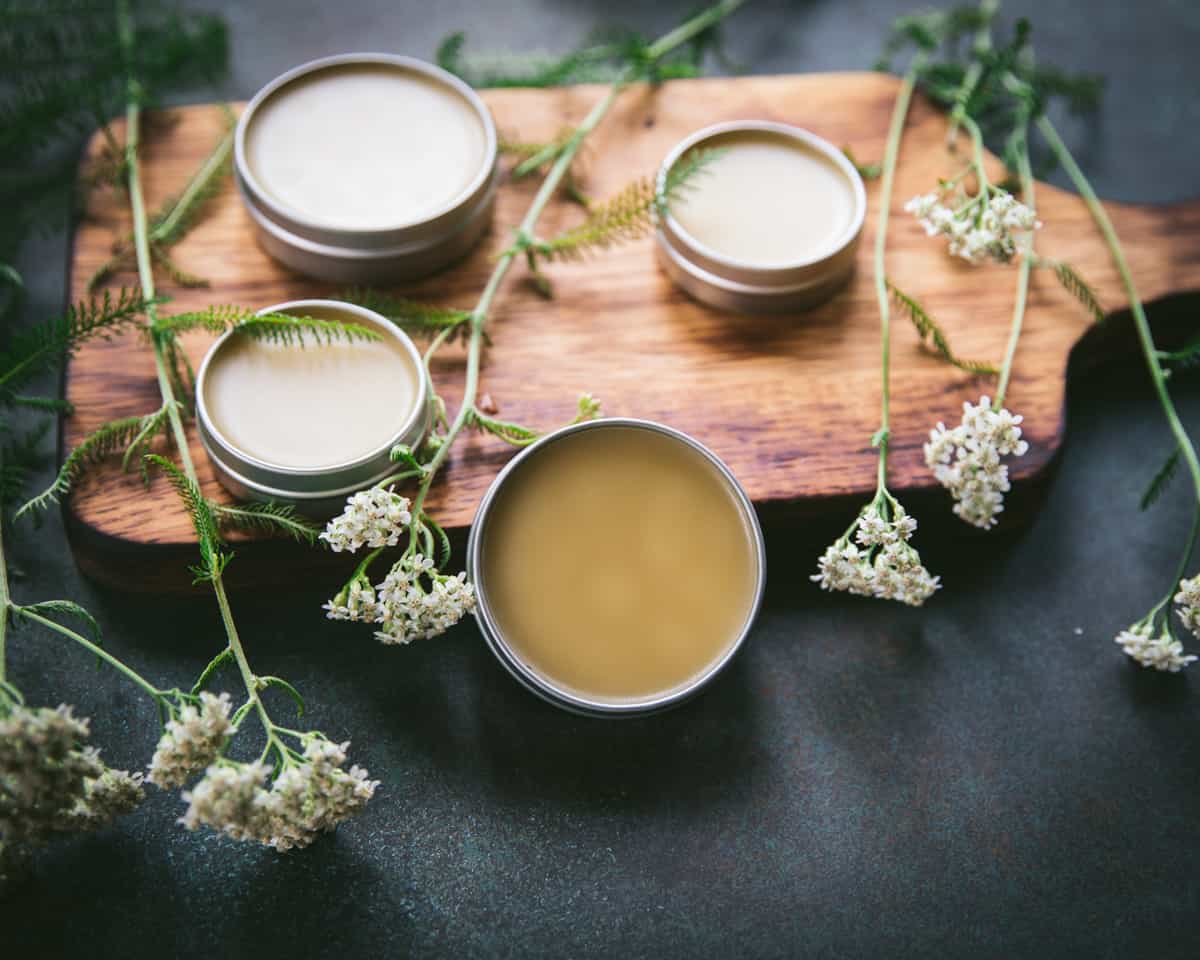
How to Use Yarrow Salve
Use this yarrow plant salve on minor cuts, wounds, or burns to slow bleeding and speed the healing process.
Yarrow salve is also wonderful for skin care. Use it on any dry skin, including severely dry and cracked skin caused by natural or chemical elements.
It will moisturize extremely dry and flaky areas, as well as help heal irritation caused by dry weather. Soothing and astringent, use the yarrow salve anywhere your skin needs it!
More Herbal Salve Recipes
- Make & Use Dandelion Salve
- Homemade Lavender Salve
- Plantain Salve for Itchy Skin
- Chickweed Salve Recipe
- Homemade Calendula Salve
- 10 Herbal Salve Recipes
- Pine Salve
Purple Dead Nettle Salve
Equipment
Ingredients
Infused Oil
- 1 cup purple dead nettle dried
- 1½ cup extra virgin olive oil
Salve
- 1 cup purple dead nettle infused oil
- 1 ounce beeswax pastilles
- 24 drops essential oil optional
Instructions
Make Purple Dead Nettle Infused Oil
- Put the purple dead nettle plants into a pint jar. Cover the purple dead nettle completely with olive oil.
- Cover the jar with a lid and place it in a cool place out of direct sunlight for at least a week and up to 6 weeks.
- Once the oil is fully infused and you are ready to make the salve, strain out the purple dead nettle, reserving the infused oil.
- Alternatively, if your plants are not completely dry, use the quick heat method to infuse the oil.
Purple Dead Nettle Salve
- Create a makeshift double boiler by putting a smaller pan, bowl, or glass measuring cup in a larger pan with an inch or two of water in it and bring the water to a simmer.
- Measure out 1 cup (240ml) of the purple dead nettle infused oil (save any excess oil you may have to use topically).
- Put the oil into the double boiler. Add the beeswax to the oil and continue to heat until it completely melts. A wooden skewer works well as a stirrer. Then, remove the mixture from the heat.
- Quickly stir in the essential oil drops if using.
- Quickly and carefully pour the salve mixture into tins or jars.
- Let the salve sit undisturbed until it is completely cooled and set up before use. This will take several hours.
Notes
- This recipe makes about 10 ounces of salve total, or five 2-ounce tins.
- It’s best to use dried purple dead nettle to make this salve. Spread out the fresh foraged plants on a drying screen or tea towel and let them sit for several days or until dry.
Quick question – I picked my yarrow weeks ago, and somehow missed the instruction to dry it first before infusing in the oils :( Will the salve recipe still work if my oil has been infused with fresh rather than dry yarrow?
Hi Jessica. It should still work, but it won’t last as long if too much moisture was introduced into the oil.
Okay I’ll give it a try. Thanks!
Would you see any risk using this for bleeding hemorrhoids in a suppository form or for people who get frequent skin bleeds due to being on blood thinners or skin tears due to thinning aging skin? I have seen recipes for powdering it to use as a stypic but like the idea of an oil or salve. Thanks
I don’t see any risk, but that may be because I’m not a doctor. I suggest asking a doctor these questions prior to using this salve.